
Medical AI & data Research group · Acıbadem Mehmet Ali Aydınlar University
ADALAB — Acıbadem Data Analytics Lab
Data science to improve the diagnostic and prognostic capacity of medical technologies.
- 12members
- 53projects
What we work on
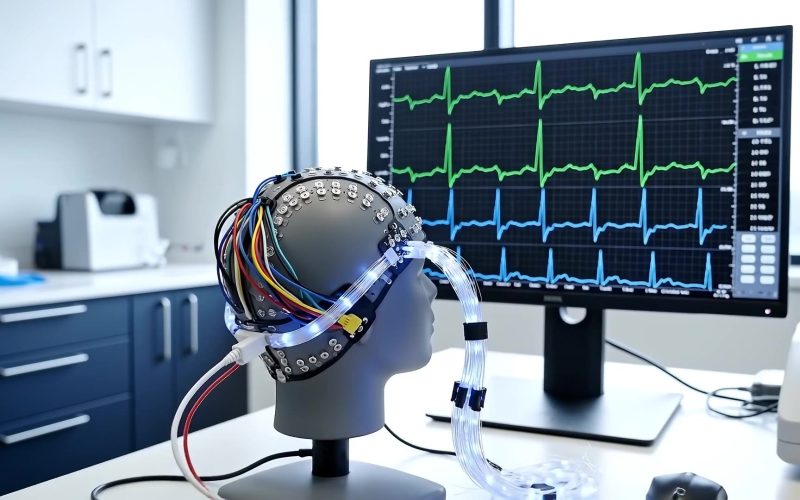
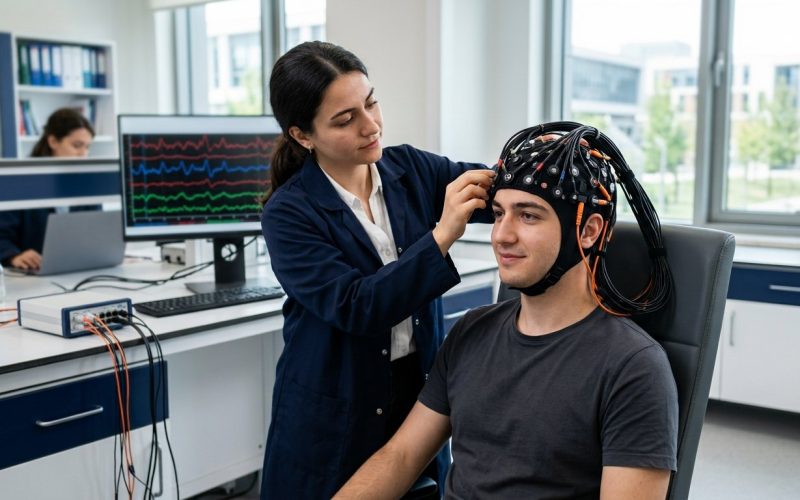
The Acıbadem Data Analytics Laboratory aims to use data science methods to improve the diagnostic and prognostic capacities of medical technologies and provides innovative data analytics solutions to improve clinical decision-making. It works through bioinformatics, biomechanics, cognitive neuroscience, artificial-intelligence-based approaches, optimisation of health processes and smart data-entry applications.
The laboratory was established in 2019 by Dr. Buğrahan Bayram, Dr. Sinem Burcu Erdoğan and Dr. Ata Akın. Early work used deep learning to classify melanomas; since then the team has taken on research questions in radiology, neuropsychiatry, neurorehabilitation, bioinformatics and sports medicine. Active topics are AI in radiology, rapid reporting via speech-to-text, AI for brain–machine interfaces, AI in neuropsychiatry and deep learning for clinical decision support.
While scientific projects come first, the laboratory also provides experimental and clinical measurement, validation, verification and prototyping services that companies in the health sector may need.
Team 12
 Principal investigator
Dr. Sinem Burcu Erdoğan
Faculty member, Biomedical Engineering; co-founder of the Acıbadem Data Analytics Lab
Co-founded ADALAB in 2019 and leads its fNIRS brain-imaging and clinical decision-support work.
Principal investigator
Dr. Sinem Burcu Erdoğan
Faculty member, Biomedical Engineering; co-founder of the Acıbadem Data Analytics Lab
Co-founded ADALAB in 2019 and leads its fNIRS brain-imaging and clinical decision-support work.
-
 Prof. Ata Akın
Co-investigator
Prof. Ata Akın
Co-investigator
-
 Assoc. Prof. Hande Argunsah
Academic Staff
Assoc. Prof. Hande Argunsah
Academic Staff
-
 Asst. Prof. Elçim Elgün Kırımlı
Principal investigator
Asst. Prof. Elçim Elgün Kırımlı
Principal investigator
-
 Asst. Prof. Ceyhun Ekrem Kırımlı
Academic Staff
Asst. Prof. Ceyhun Ekrem Kırımlı
Academic Staff
-
 Assoc. Prof. Bernis Sütçübaşı
Academic Staff
Assoc. Prof. Bernis Sütçübaşı
Academic Staff
-
 Assoc. Prof. Bukem Tanoren
Principal investigator
Assoc. Prof. Bukem Tanoren
Principal investigator
-
 Research Assistant Begüm Yalçın
PhD Student
Research Assistant Begüm Yalçın
PhD Student
- Resr. Emre Yorgancıgil Post-doctoral Researcher
- Research Assistant Gulnaz Yukselen PhD Student
- Roksi Franci Research Staff
- Derin Sağlar Postgraduate Research Student
Projects & funders
-
Design and Fabrication of a dual extrusion type non-planar 3D printer
Project team: Kırımlı C. E., Özbay E.(Executive).
- Funder
- ABAPKO — ACU Scientific Research Projects Commission · Project Supported by Higher Education Institutions, BAP Research Project
-
Work your brain, renew yourself: an innovative brain renewal programme
Project team: Sütçübaşı B., Taş C.(Executive).
-
Autonomous management of search-engine advertising campaigns
Project team: BULUT A. (Executive).
- Funder
- TÜBİTAK — Scientific and Technological Research Council of Türkiye · TUBITAK Project, 1001 - Program for Supporting Scientific and Technological Research Projects
-
Functional connectivity measured by fNIRS during cognitive tasks
Project team: Akın A. (Executive).
- Funder
- TÜBİTAK — Scientific and Technological Research Council of Türkiye · TUBITAK Project, 1001 - Program for Supporting Scientific and Technological Research Projects
-
Effects of ankle taping on postural control and injury prevention in basketball players under 20, studied with a wearable motion-analysis system
Project team: Argunsah H. (Executive), Yalçın B..
- Funder
- ABAPKO — ACU Scientific Research Projects Commission · Project Supported by Higher Education Institutions, BAP Research Project
-
Tissue oxygenation measurement and activity analysis system
Project team: Akın A. (Executive).
-
Global market access for health entrepreneurs
Project team: Akın A. (Executive).
-
Metaphor processing in Alzheimer’s disease and frontotemporal dementia and the pathophysiology of its impairment studied with EEG and NIRS
Project team: Erdoğan S. B., Güntekin B., Hanoğlu L.(Executive).
- Funder
- TÜBİTAK — Scientific and Technological Research Council of Türkiye · TUBITAK Project, 1001 - Program for Supporting Scientific and Technological Research Projects
Show all 53 projects
-
Design of a DNA-hydrogel-based quartz crystal microbalance biosensor
Project team: Kırımlı C. E., Çınar M. C.(Executive).
- Funder
- ABAPKO — ACU Scientific Research Projects Commission · Project Supported by Higher Education Institutions, BAP Research Project
-
Development of bioactive hydrogels for use as artificial neural tissue
Project team: Kırımlı C. E., Özmen A. M.(Executive), Gök Ö..
- Funder
- ABAPKO — ACU Scientific Research Projects Commission · Project Supported by Higher Education Institutions, BAP Research Project
-
Design of a cardiovascular organ-on-a-chip for early detection of heart attack during myocardial ischaemia
Project team: Kırımlı C. E., Gök Ö., Ateş B.(Executive), Şenay Ş., Eroğlu T..
- Funder
- TÜBİTAK — Scientific and Technological Research Council of Türkiye · TUBITAK Project, 2209-A - Üniversite Öğrencileri Araştırma Projeleri Destekleme Programı
-
Effects of the action-observation method on pain, functional level and brain haemodynamics in knee osteoarthritis
Project team: ÖZTÜRK Ö. (Executive), ERDOĞAN S. B., ALGUN Z. C., Bombacı H..
- Funder
- TÜBİTAK — Scientific and Technological Research Council of Türkiye · TUBITAK Project, 1002 - Quick Support Program
-
Design of a wireless, electrodeless quartz crystal microbalance driver circuit
Project team: Kırımlı C. E. (Executive).
- Funder
- ABAPKO — ACU Scientific Research Projects Commission · Project Supported by Higher Education Institutions, BAP Research Project
-
Real-time mutation detection by loop-mediated isothermal amplification on a quartz crystal microbalance
Project team: Kırımlı C. E., Bulut A.(Executive).
- Funder
- TÜBİTAK — Scientific and Technological Research Council of Türkiye · TUBITAK Project, 1002 - Quick Support Program
-
A wearable device that detects falls and alerts the relevant units by wireless communication
Project team: Yalçın B. (Executive), Argunşah Bayram H..
- Funder
- ABAPKO — ACU Scientific Research Projects Commission · Project Supported by Higher Education Institutions, BAP Research Project
-
Development of biodegradable microneedle patches for controlled drug release and in situ wound healing
Project team: Kırımlı C. E., Canko G. N.(Executive), Gök Ö..
- Funder
- TÜBİTAK — Scientific and Technological Research Council of Türkiye · TUBITAK Project, 2209-A - Üniversite Öğrencileri Araştırma Projeleri Destekleme Programı
-
İstanbul Biodesign Center
Project team: Akın A. (Executive).
-
Preparation of drug-loaded microneedle platforms for transdermal drug delivery
Project team: Kırımlı C. E., Ilık S. B.(Executive), Gök Ö..
- Funder
- TÜBİTAK — Scientific and Technological Research Council of Türkiye · TUBITAK Project, 2209-A - Üniversite Öğrencileri Araştırma Projeleri Destekleme Programı
-
Early detection of the TP53 249T point mutation in urine with a piezoelectric plate biosensor
Project team: KIRIMLI C. E. (Executive).
- Funder
- TÜBİTAK — Scientific and Technological Research Council of Türkiye · TUBITAK Project, 2232 - Dormitory Research Scholarship Program
-
Effects of ankle taping on postural control and injury prevention in basketball players under 20, studied with a wearable motion-analysis system
Project team: Argunsah H..
- Funder
- ABAPKO — ACU Scientific Research Projects Commission · Project Supported by Higher Education Institutions, BAP Research Project
-
Effect of biofeedback on knee joint biomechanics and heart rhythm during running
Project team: ARGUNSAH H. (Executive).
- Funder
- TÜBİTAK — Scientific and Technological Research Council of Türkiye · TUBITAK Project, 2232 - Dormitory Research Scholarship Program
-
Test optimisation with real-time test data analysis
Project team: Arslan B. (Executive).
- Funder
- TÜBİTAK — Scientific and Technological Research Council of Türkiye · TUBITAK Project, 3501 - National Young Researcher Career Development Program
-
Use of a robotic exoskeleton in the rehabilitation of patients with traumatic brain injury
Project team: Argunsah H..
-
Multimodal biomedical microscope development and molecular imaging laboratory (3m-lab)
Project team: Tanoren B., Ünlü M. B.(Executive).
-
Diagnosis of small-scale manufacturing defects affecting integrated circuit timing
Project team: Arslan B. (Executive).
- Funder
- TÜBİTAK — Scientific and Technological Research Council of Türkiye · TUBITAK Project, 2232 - Dormitory Research Scholarship Program
-
Neural basis of object–spatial context relationships studied with functional MRI
Project team: Ay U., Sütçübaşı B., Kurt E., Bayram A., Gürvit İ. H., Bilgiç B., et al..
- Funder
- TÜBİTAK — Scientific and Technological Research Council of Türkiye · TUBITAK Project, 1001 - Program for Supporting Scientific and Technological Research Projects
-
Optimization of Lignin-encapsulation Efficiency of Antimicrobial Photodynamic Therapy Agents of Photosensitizing Phthalocyanine with Machine Learning Assisted Experiment Design
Project team: Kırımlı E. E. (Executive), Dumoulin F., İşci Ü., Kırımlı C. E..
- Funder
- ABAPKO — ACU Scientific Research Projects Commission · Project Supported by Higher Education Institutions, BAP Research Project
-
Antimicrobial effects of different quantum dots on standard and laboratory-collection microbial strains, with fluorescence microscopy imaging
Project team: TANOREN B. (Executive), Kızılbey K., KOCAGÖZ Z. T., GÖK Ö..
- Funder
- TÜSEB — Turkish Institutes of Health · Research Project of the Presidency of Turkey Health Institutes (TÜSEB)
-
Touch Vision
Project team: Dumlu S. N., Kırımlı C. E. (Executive), Kocagöz Z. T..
- Funder
- TÜSEB — Turkish Institutes of Health · Research Project of the Presidency of Turkey Health Institutes (TÜSEB)
-
Neurotechnology solutions platform for challenges threatening human function
Project team: Argunsah H..
- Funder
- TÜBİTAK — Scientific and Technological Research Council of Türkiye · TUBITAK Project, 1004 - Mükemmeliyet Merkezi Destek Programı FAZ I
-
Synthesis and characterisation of carbon quantum dots by the hot-bubble method
Project team: TANOREN B. (Executive), DİPÇİN B., GÜVENDİREN B., KIZILBEY K..
- Funder
- ABAPKO — ACU Scientific Research Projects Commission · Project Supported by Higher Education Institutions, BAP Research Project
-
Liquid-biopsy cancer diagnosis with a wireless, electrodeless QCM
Project team: Kırımlı C. E. (Executive).
- Funder
- TÜBİTAK — Scientific and Technological Research Council of Türkiye · TUBITAK Project, 1001 - Program for Supporting Scientific and Technological Research Projects
-
Effects of two virtual-reality methods on brain haemodynamic activity in people with chronic pain
Project team: ÖZTÜRK Ö. (Executive), TEZCAN M. E., ERDOĞAN S. B., FEYZİOĞLU Ö..
- Funder
- ABAPKO — ACU Scientific Research Projects Commission · Project Supported by Higher Education Institutions, BAP Other
-
Decoding Pain and Non-pain States Using functional Near Infrared Spectroscopy
Project team: Dumlu S. N., Erdoğan S. B., Yukselen G., Öztürk Ö..
-
Formation of TTR-gene-targeted nanoparticles, their effect on transthyretin production and cell viability, and confocal observation of cell localisation
Project team: Tanoren B. (Executive), Gök Ö., DİPÇİN B..
- Funder
- TÜSEB — Turkish Institutes of Health · Research Project of the Presidency of Turkey Health Institutes (TÜSEB)
-
Assessing Doctor and Patient explanation and information needs of Explainable Artificial Intelligence.
Project team: Dumlu S. N., Yıldırım F..
-
Effect of vestibular stimulation on virtual-reality-based bodily self-consciousness
Project team: Erdoğan S. B., Hanoğlu L..
- Funder
- TÜBİTAK — Scientific and Technological Research Council of Türkiye · TUBITAK Project, 1002 - Quick Support Program
-
Automatic Semantic Segmentation of Organs at Risk and Target Tumor Volume in Radiotherapy Planning CT Images of Nasopharyngeal Cancer
Project team: Dumlu S. N., Tanoren B., Özyar E., Akin A..
-
Development of hydrogel-based microneedles as controlled drug release systems
Project team: Gök Ö., Bıçkıcı I.(Executive), Kirimli C. E..
- Funder
- TÜBİTAK — Scientific and Technological Research Council of Türkiye · TUBITAK Project, 2209-A - Üniversite Öğrencileri Araştırma Projeleri Destekleme Programı
-
Development of antiviral-loaded dissolving microneedle arrays and in vitro evaluation of their activity against herpes simplex virus type 1
Project team: Gök Ö., Kırımlı C. E., Altuntaş E.(Executive).
- Funder
- TÜSEB — Turkish Institutes of Health · Research Project of the Presidency of Turkey Health Institutes (TÜSEB)
-
Preparation of hydrogel-based drug-loaded microneedles as a transdermal drug delivery platform
Project team: Gök Ö., Kirimli C. E., Kara E. C.(Executive).
- Funder
- TÜBİTAK — Scientific and Technological Research Council of Türkiye · TUBITAK Project, 2209-A - Üniversite Öğrencileri Araştırma Projeleri Destekleme Programı
-
In vitro determination of the senotherapeutic potential of molecules identified by drug repurposing
Project team: BOZAYKUT EKER P. (Executive).
- Funder
- TÜBİTAK — Scientific and Technological Research Council of Türkiye · TUBITAK Project, 1001 - Program for Supporting Scientific and Technological Research Projects
-
Hand held-Portative Slit Lamp Biomicroscope
Project team: Kirimli C. E. (Executive).
-
The Mathematical Mind of Five-Year-Old Children: Mathematical Abilities in the Context of Home, School, and Hemodynamic Changes
Project team: Hamamcı B.(Executive), Akın A., Erdoğan S. B., Yukselen G., Demircan H. Ö..
- Funder
- TÜBİTAK — Scientific and Technological Research Council of Türkiye · TUBITAK Project, 1002 - Quick Support Program
-
Development of a functional in vitro human heart muscle–coronary vessel model by 3D bioprinting
Project team: Kenar H. (Executive), Karson A., Kırımlı C. E., Yücel D., Yavuz Ş..
- Funder
- TÜBİTAK — Scientific and Technological Research Council of Türkiye · TUBITAK Project, 1001 - Program for Supporting Scientific and Technological Research Projects
-
Integrated, scalable, functional nanostructures and systems
Project team: Kirimli C. E., Dulda A..
- Funder
- TÜBİTAK — Scientific and Technological Research Council of Türkiye · TUBITAK Project, 1004 – Mükemmeliyet Merkezi Destek Programı FAZ II
-
Development of a nanotechnological lateral-flow strip sensor for disease diagnosis
Project team: Kırımlı C. E., Dulda A.(Executive), Tuna B. G., Yüce M., Doğan S., Yanıkkaya Demirel G., et al..
- Funder
- TÜBİTAK — Scientific and Technological Research Council of Türkiye · TUBITAK Project, 1004 - Mükemmeliyet Merkezi Destek Programı FAZ I
-
An AI-assisted portable exercise device for children: Society 5.0 digital health at home and the Internet of Things
Project team: Argunsah H..
- Funder
- TÜSEB — Turkish Institutes of Health · Research Project of the Presidency of Turkey Health Institutes (TÜSEB)
-
Semantic Segmentation of Retinal Images
Project team: Dumlu S. N..
-
Effects of PEGylation and peptide interactions of carbon quantum dots on cell viability, apoptosis and cell localisation
Project team: TANOREN B. (Executive), GÖK ÖZATAY Ö., DİPÇİN B., KESKİN TOKLU N., KIZILBEY K..
- Funder
- ABAPKO — ACU Scientific Research Projects Commission · Project Supported by Other Official Institutions, BAP Research Project
-
Virtual-reality-assisted training to improve the performance of ski jumpers
Project team: Erdoğan S. B., Bedir D..
- Funder
- TÜBİTAK — Scientific and Technological Research Council of Türkiye · TUBITAK Project, 1001 - Program for Supporting Scientific and Technological Research Projects
-
Developmental progress domains in ARID1B-related disorder: a multi-method, multi-centre prospective natural-history study
Project team: Akgün Doğan Ö., Sütçübaşı B., Alanay Y..
-
International Interdisciplinary Network on Smart Healthy Age-friendly Environments
Project team: Akin A..
- Funder
- European Union — Horizon Europe · European Science Foundation (ESF) Supported Project
Selected outputs
-
2025
ARGUNSAH H., ALTINTAŞ L., ŞAHİNER A. M. Eye-tracking insights into cognitive strategies, learning styles, and academic outcomes of Turkish medicine students. BMC MEDICAL EDUCATION, vol.25, no.1, 2025.
-
2024
Aydınlar A., Mavi A., Kütükçü E., KIRIMLI E. E., ALİS D. C., AKIN A., et al. Awareness and level of digital literacy among students receiving health-based education. BMC Medical Education, vol.24, no.1, 2024.
-
2024
Tanoren B. Calibration of scanning acoustic microscopy for the differentiation between unstable and stable atherosclerotic plaques by X-ray fluorescence imaging.. RADIATION PHYSICS AND CHEMISTRY, vol.224, pp.112058, 2024.
-
2024
Eken A., Yüce M., Yükselen G., Erdoğan S. B. Explainable fNIRS-based pain decoding under pharmacological conditions via deep transfer learning approach.. Neurophotonics, vol.11, no.4, pp.45015, 2024.
-
2024
AKIN A., Yorgancıgil E., Öztürk O. C., SÜTÇÜBAŞI B., KIRIMLI C. E., Elgün Kırımlı E. E., et al. Small world properties of schizophrenia and OCD patients derived from fNIRS based functional brain network connectivity metrics. SCIENTIFIC REPORTS, vol.14, no.1, 2024.
-
2024
SÜTÇÜBAŞI B., BAYRAM A., Metin B., DEMİRALP T. Neural correlates of approach-avoidance behavior in healthy subjects: Effects of low-frequency repetitive transcranial magnetic stimulation (rTMS) over the right dorsolateral prefrontal cortex. INTERNATIONAL JOURNAL OF PSYCHOPHYSIOLOGY, vol.203, 2024.
-
2024
Argunsah H., Kaya E. Exploring the Contribution of Joint Angles and sEMG Signals on Joint Torque Prediction Accuracy using LSTM-Based Deep Learning Techniques. COMPUTER METHODS IN BIOMECHANICS AND BIOMEDICAL ENGINEERING, vol.28, no.13, pp.1-10, 2024.
-
2024
Terzioglu S., Cogalmis K. N., Bulut A. Ad creative generation using reinforced generative adversarial network. ELECTRONIC COMMERCE RESEARCH, vol.24, no.3, pp.1491-1507, 2024.
-
2024
Shirzadi S., Dadgostar M., Einalou Z., Erdoğan S. B., Akın A. Sex based differences in functional connectivity during a working memory task: an fNIRS study. FRONTIERS IN PSYCHOLOGY, vol.15, 2024.
-
2024
TANOREN B., Dipcin B., Birdogan S., Unlu M. B., Ozdol C., Aghayev K. Examination of annulus fibrosus and nucleus pulposus in cervical and lumbar intervertebral disc herniation patients by scanning acoustic microscopy, scanning electron microscopy and energy dispersive spectroscopy. RSC ADVANCES, vol.14, no.4, pp.2603-2609, 2024.
From the group
Young Neuroscience Talents Gathered at Brain Bee Türkiye 2026
The International Brain Bee, an international neuroscience competition for high school students, was hosted by our university on June 13, 2026. Building on last year's success, the competition expanded across five cities in Türkiye.
Brain Bee 2025 Competition Held at Our University
The Brain Bee competition, organized for high school students interested in neuroscience and held for the second time in Turkey this year, took place on June 14, 2025, hosted by our university.
Brain Bee 2024- Türkiye Competition
Our university had the honor of hosting the first-ever Brain Bee competition in Türkiye, aimed at high school students interested in neuroscience, on June 1, 2024, with support from the Brain Research Society.
Join us
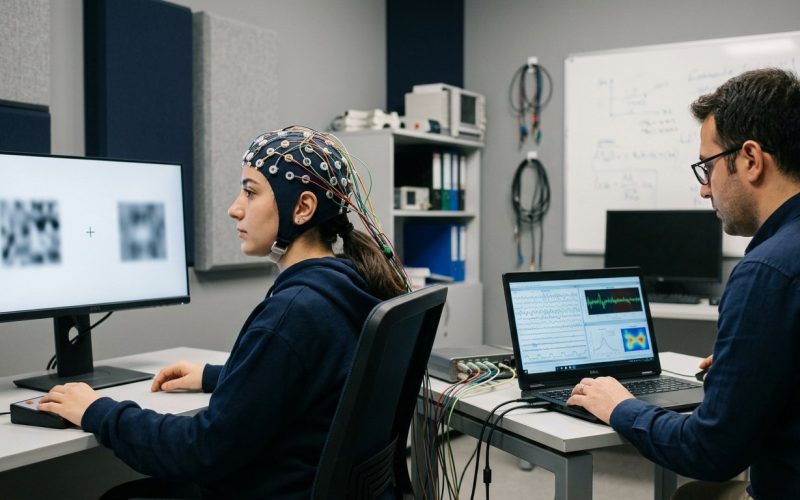
We welcome students and researchers to our group. Write to Dr. Sinem Burcu Erdoğan to join, or bring a project idea and look at the instruments we can offer for collaboration.
Open to rotation students
Write to the group