
Drug discovery Research group · Acıbadem Mehmet Ali Aydınlar University
ACU-FUNCHEM — Functional Chemistry Research Group
Where analytical chemistry meets synthesis, functional materials and biological application.
- 5members
- 17projects
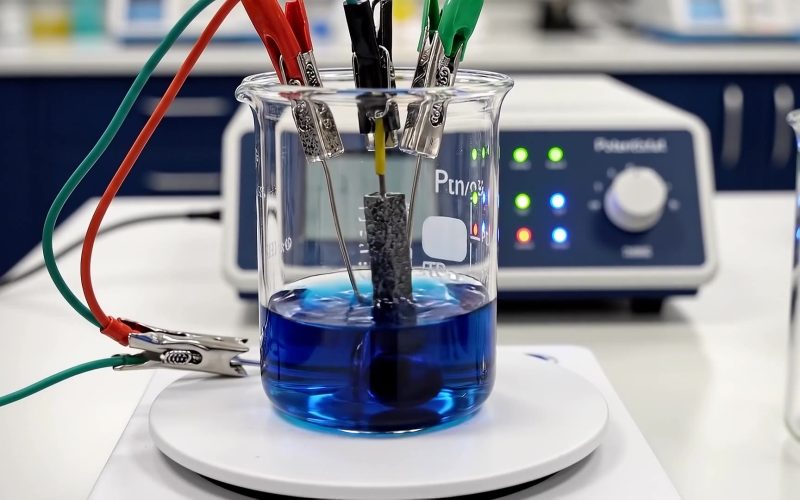
What we work on
The Acıbadem University Functional Chemistry Research Group is formed by the academic staff of the Department of Analytical Chemistry in the Faculty of Pharmacy and conducts interdisciplinary research where chemistry intersects with analysis, synthesis, materials development and biological application.
The group's approach is to design structures at the molecular level, characterise them analytically, turn them into functional materials and evaluate their applicability in biochemistry and pharmacy. Organic and inorganic synthesis, polymeric materials, biosensors, nanotechnological systems, spectroscopic and chromatographic analysis and bio-applications are its main areas. Recent work includes fluorinated phthalocyanines as DNA-interacting agents and singlet-oxygen producers, nanoparticle-modified electrochemical sensors, DNA hybrid systems as biocatalysts, and an HPLC-DAD method for cisplatin analysis.
ACU-FUNCHEM aims to bring researchers, academics and students together in a productive, open and curiosity-driven scientific environment.
Team 5
 Principal investigator
Prof. Umut Bulut
Professor of Analytical Chemistry; Functional Chemistry Research Group (ACU-FUNCHEM)
Works on electrochemical sensors and functional materials where analytical chemistry meets biological application.
Principal investigator
Prof. Umut Bulut
Professor of Analytical Chemistry; Functional Chemistry Research Group (ACU-FUNCHEM)
Works on electrochemical sensors and functional materials where analytical chemistry meets biological application.


Projects & funders
-
Use of dibenzo f h quinoxaline derivatives as photosensitizers in photoinitiated cationic polymerizations of vinyl and heterocyclic monomers
Project team: Bulut U. (Executive).
-
Synthesis, characterisation and HPLC analysis of imidazolidine-2-thione derivatives
Project team: SARIGÜL ÖZBEK S. (Executive).
- Funder
- ABAPKO — ACU Scientific Research Projects Commission · Project Supported by Higher Education Institutions, BAP Other
-
Ethylenedioxythiophene functionalized quinoxaline derivatives as photosensitizers in cationic photopolymerization of vinyl and heterocyclic compounds
Project team: Bulut U. (Executive).
- Funder
- ABAPKO — ACU Scientific Research Projects Commission · Project Supported by Higher Education Institutions, BAP Research Project
-
Development of IoT-Integrated Point-of-Care Multiplex Nanosensor Platform for Early Detection of AKI after CABG in Individuals with and without CKD: Pilot Clinical Verification and Big Data-Driven Analysis
Project team: Bulut U., Söylemez S.(Executive), Kirimli E. E., Türkmen K., Altunkaya S., Ünalan H. E..
- Funder
- TÜBİTAK — Scientific and Technological Research Council of Türkiye · TÜBİTAK - AB COST Project
-
Enantiodifferentiation and separation of thiohydantoin derivatives for improved biomedical applications
Project team: Sarıgül Özbek S. (Executive), Özbek M. O., Erol Günal Ş., Teke Tunçel Ş..
- Funder
- TÜBİTAK — Scientific and Technological Research Council of Türkiye · TÜBİTAK International Bilateral Joint Cooperation Program Project, TÜBİTAK – MoESTD (Serbia) Joint Cooperation Program
-
Synthesis of Novel Potential Tyrosinase Inhibitor Drug Candidate Molecules, Development of L-DOPA Biosensors Based on Tyrosinase Inhibition, and Evaluation of Anti-Parkinson Activity for Parkinson-Tyrosinase Relationship
Project team: Bulut U., Söylemez S.(Executive), Sarıgül Özbek S., Yavuz M., Erbaş Çakmak S., Çınaroğlu S. S..
- Funder
- TÜBİTAK — Scientific and Technological Research Council of Türkiye · TUBITAK Project, 1001 - Program for Supporting Scientific and Technological Research Projects
-
New phthalocyanine-modified gold nanoparticles for non-linear optical and optical limiting applications
Project team: Öztürk N., Yenilmez H. Y., Kobak R. Z., Özçelik Ş., Erdem M., Bayir Z.(Executive).
- Funder
- ABAPKO — ACU Scientific Research Projects Commission · Project Supported by Higher Education Institutions, BAP Other
-
Development of Point-of-Care Immunosensor Systems for Early Diagnosis and Follow-Up of Chronic Kidney Disease
Project team: Bulut U., Timur S.(Executive), Söylemez S., Güler Çelik E..
- Funder
- TÜBİTAK — Scientific and Technological Research Council of Türkiye · TÜBİTAK - AB COST Project
Show all 17 projects
-
Synthesis, characterisation and in-silico and in-vitro anticancer evaluation of new drug candidate molecules and their peptide hybrids with potential aromatase inhibition
Project team: SARIGÜL ÖZBEK S. (Executive), KANLIDERE Z., COŞKUN G. P., ÖZBEK M. O., GÖK Ö..
- Funder
- TÜBİTAK — Scientific and Technological Research Council of Türkiye · TUBITAK Project, 1001 - Program for Supporting Scientific and Technological Research Projects
-
Development of a UV-spectroscopic assay for tamoxifen raw material and its application to pharmaceutical preparations
Project team: SARIGÜL ÖZBEK S. (Executive), DEMİRBOLAT G. M., GÜNBAY Ş..
- Funder
- ABAPKO — ACU Scientific Research Projects Commission · Project Supported by Higher Education Institutions, BAP Other
-
Preparation of reduced graphene oxide / metallophthalocyanine polymer composites and their supercapacitor applications
Project team: Öztürk N., Koca A., Yenilmez H. Y., Bayir Z.(Executive).
- Funder
- TÜBİTAK — Scientific and Technological Research Council of Türkiye · TUBITAK Project, 1001 - Program for Supporting Scientific and Technological Research Projects
-
Development of Antineoplastic Agent-Loaded Nanostructured Lipid Carriers
Project team: Günbay Ş. (Executive).
- Funder
- TÜBİTAK — Scientific and Technological Research Council of Türkiye · TUBITAK Project, 2209-A - Üniversite Öğrencileri Araştırma Projeleri Destekleme Programı
-
Biological properties of metallo- and metal-free phthalocyanine–gold nanoconjugates
Project team: Öztürk N., Özdemir S., Yenilmez H. Y., Bayir Z.(Executive).
-
Preparation of biocatalysts from chemically modified oligonucleotides
Project team: Kanlıdere Z. (Executive), Sarıgül Özbek S..
- Funder
- TÜBİTAK — Scientific and Technological Research Council of Türkiye · TUBITAK Project, 3501 - National Young Researcher Career Development Program
-
In vitro investigation of the potential of niosomes encapsulated with fluorescent polymers for theranostic treatment of cancer
Project team: Barlas F. B.(Executive), Bulut U..
-
Multifunctional quaternary metallophthalocyanines for biological applications
Project team: Öztürk N. (Executive), Bayir Z., Özdemir S..
- Funder
- TÜBİTAK — Scientific and Technological Research Council of Türkiye · TUBITAK Project, 1002 - Quick Support Program
-
Use of ethylenedioxythiophene functionalized benzotriazole derivatives as photosensitizers in photoinitiated cationic polymerizations of vinyl and heterocyclic monomers
Project team: Bulut U. (Executive).
Selected outputs
-
2026
Yeniterzi D., Bulut U., Akbayrak S., Soylemez S. Au/Co3O4 nanoparticle-modified electrochemical sensor for the selective and simultaneous detection of galantamine, dopamine, and uric acid. ELECTROCHIMICA ACTA, vol.575, 2026.
-
2026
ÖZTÜRK N. DNA Binding Mode of Fluorine-Containing Cobalt(II) Phthalocyanine. Afyon Kocatepe Üniversitesi Fen ve Mühendislik Bilimleri Dergisi, vol.26, no.4, 2026.
-
2026
ÖZTÜRK N. Axially Disubstituted Silicon (IV) Phthalocyanine Bearing Fluorinated Groups: Synthesis, Aggregation Behavior, and Singlet Oxygen Production Capacity. Black Sea Journal of Engineering and Science, vol.9, no.4, 2026.
-
2026
ÖZTÜRK N., SARIGÜL ÖZBEK S. New Fluorinated Phenoxy-Containing Zinc (II) Phthalocyanine; Synthesis, Aggregation Behavior, and Singlet Oxygen Production Capacity. Celal Bayar Üniversitesi Fen Bilimleri Dergisi, vol.22, 2026.
-
2026
Farajzadeh N. Biological activities of metal oxide nanoparticles modified with hexadeca-substituted cobalt(ii) phthalocyanine bearing fluorinated substituents. RSC ADVANCES, vol.16, no.27, pp.25052-25066, 2026.
-
2026
Sarıgül Özbek S., Saglam A. B., Demirbolat G. M. Development and Validation of an Alternative HPLC-DAD Method for Cisplatin Analysis in Solution. Journal of the Turkish Chemical Society, Section A: Chemistry, vol.1, pp.1-7, 2026.
-
2026
Sevinç Özdemir N., Oney O. I., Yenilmez H. Y., Öztürk N., Bayır Z. Aggregation Tendency, Cellular Uptake, and Viability Effects of Structurally Distinct Carbazole-Phthalocyanine Gold Nanoconjugates. ACS ORGANIC & INORGANIC AU, vol.6, no.1, pp.149-160, 2026.
-
2026
Farajzadeh Öztürk N., Yenilmez H. Y., BUDAK DOĞRAMACI Ö., KOCA A., Altuntaş Bayır Z. Design of iron(iii) phthalocyanine/reduced graphene oxide nanocomposites on nickel foam as hybrid supercapacitors. DALTON TRANSACTIONS, vol.55, no.1, pp.205-214, 2026.
-
2026
Sarigul-Ozbek S., ÖZTÜRK N. Quaternary Hexadeca-Substituted Manganese (III) Phthalocyanine as a DNA Interacting Agent; Binding Mode and Thermodynamic Parameters. EXPERIMED, vol.16, no.1, pp.37-42, 2026.
-
2025
ÖZTÜRK N., Akin M., ŞAKİ N., Bayır Z. Design of Active Heterocycle-Modified Triangular Silver Nanoprisms: Antioxidants and Antibacterial Agents Against <i>Staphylococcus aureus</i>. CHEMISTRY & BIODIVERSITY, vol.22, no.12, 2025.
From the group
TÜBİTAK backs a point-of-care nanosensor for kidney injury after heart surgery
Prof. Umut Bulut and Asst. Prof. Elçim Elgün Kırımlı join a TÜBİTAK 2515 project led from Necmettin Erbakan University within the PerMediK Action on personalised medicine in chronic kidney disease.
Join us
Researchers, academics and students are welcome in a productive, open and curiosity-driven scientific environment.
Open to rotation students
Write to the group