
Biomaterials Research group · Acıbadem Mehmet Ali Aydınlar University
ACU-BCBL — Biosensors and Computational Biomedicine Laboratory
Next-generation biosensor platforms built on functional materials and machine learning, within the Biomaterials Center.
- 7members
- 6projects
- 1partner
What we work on
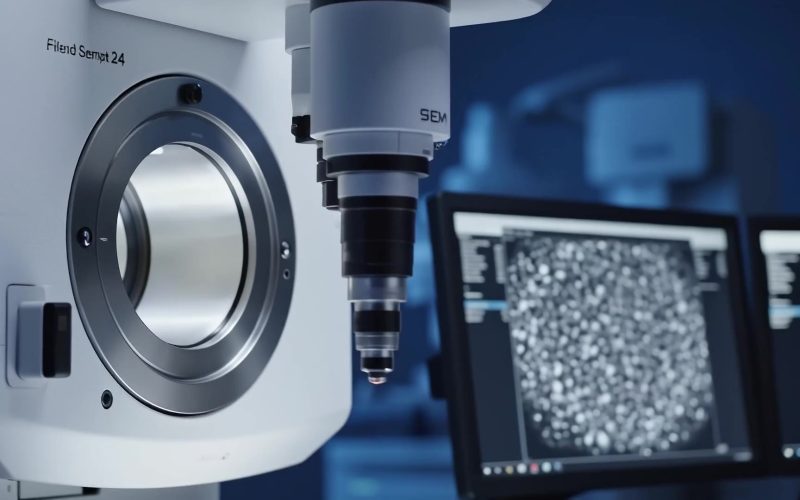
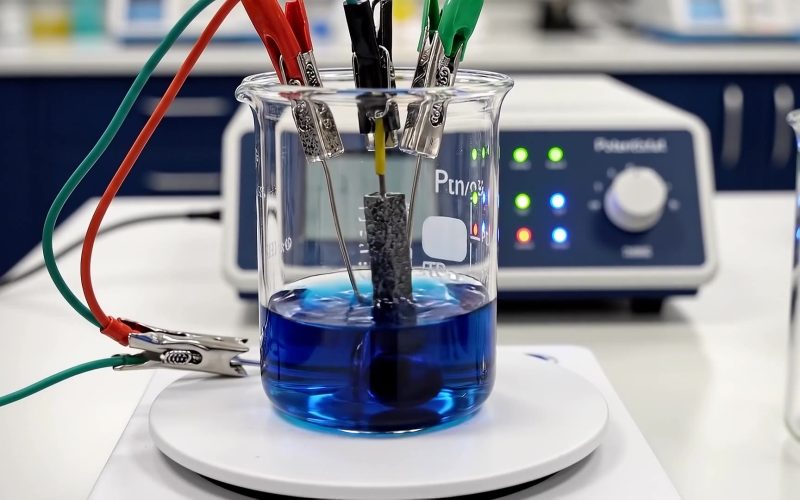
The ACU Biosensors and Computational Biomedicine Laboratory (ACU-BCBL) operates within the Acıbadem University Biomaterials Center and focuses on innovative sensor technologies and functional materials. Its aim is to raise the performance of diagnostic and monitoring systems and to develop next-generation biosensor platforms supported by machine learning and advanced materials engineering, offering solutions in both basic science and clinical application.
Recent work includes machine-learning model chaining to study how impedance measurement parameters affect the limit of detection of QCM-D sensors (IEEE Sensors Journal, 2025), a hydrogel-integrated heart-on-a-chip platform for myocardial ischaemia markers (ACS Omega, 2024), peptide-based detection of SARS-CoV-2 antibodies (Biomimetics, 2023) and label-free genetic detection of enteropathogens in stool without isolation or amplification (Biosensors & Bioelectronics). The laboratory is a partner in the TÜBİTAK 2515 COST project on a point-of-care nanosensor for acute kidney injury after cardiac surgery.
Team 7
 Principal investigator
Asst. Prof. Elçim Elgün Kırımlı
Assistant Professor of Computer Engineering; ACU Biosensors and Computational Biomedicine Laboratory
Works on machine-learning-assisted biosensing at ACU-BCBL, from quartz crystal microbalance impedance analysis to point-of-care diagnostics.
Principal investigator
Asst. Prof. Elçim Elgün Kırımlı
Assistant Professor of Computer Engineering; ACU Biosensors and Computational Biomedicine Laboratory
Works on machine-learning-assisted biosensing at ACU-BCBL, from quartz crystal microbalance impedance analysis to point-of-care diagnostics.
-
 Research Assistant Erokay Gürz
PhD Student
Research Assistant Erokay Gürz
PhD Student
-
 Asst. Prof. Ceyhun Ekrem Kırımlı
Academic Staff
Asst. Prof. Ceyhun Ekrem Kırımlı
Academic Staff
- Mardin Nasouti Undergraduate Student
- Pelin Ece Burgun Undergraduate Student
- Oğulcan Zorba Undergraduate Student
- Sudenaz Fatma Öner Undergraduate Student
Projects & funders
-
Liquid-biopsy cancer diagnosis with a wireless, electrodeless QCM
Project team: Kırımlı C. E. (Executive).
- Funder
- TÜBİTAK — Scientific and Technological Research Council of Türkiye · TUBITAK Project, 1001 - Program for Supporting Scientific and Technological Research Projects
-
Development of antiviral-loaded dissolving microneedle arrays and in vitro evaluation of their activity against herpes simplex virus type 1
Project team: Gök Ö., Kırımlı C. E., Altuntaş E.(Executive).
- Funder
- TÜSEB — Turkish Institutes of Health · Research Project of the Presidency of Turkey Health Institutes (TÜSEB)
-
Development of a functional in vitro human heart muscle–coronary vessel model by 3D bioprinting
Project team: Kenar H. (Executive), Karson A., Kırımlı C. E., Yücel D., Yavuz Ş..
- Funder
- TÜBİTAK — Scientific and Technological Research Council of Türkiye · TUBITAK Project, 1001 - Program for Supporting Scientific and Technological Research Projects
-
Real-time mutation detection by loop-mediated isothermal amplification on a quartz crystal microbalance
Project team: Kırımlı C. E., Bulut A.(Executive).
- Funder
- TÜBİTAK — Scientific and Technological Research Council of Türkiye · TUBITAK Project, 1002 - Quick Support Program
-
Design of a wireless, electrodeless quartz crystal microbalance driver circuit
Project team: Kırımlı C. E. (Executive).
- Funder
- ABAPKO — ACU Scientific Research Projects Commission · Project Supported by Higher Education Institutions, BAP Research Project
-
Point-of-care IoT-integrated multiplex nanosensor for acute kidney injury after coronary artery bypass
Development and pilot clinical validation of a point-of-care, IoT-integrated multiplex nanosensor for the early diagnosis of acute kidney injury following coronary artery bypass in individuals with and without chronic kidney disease, with big-data integration. Led by Prof. Saniye Söylemez, Necmettin Erbakan University.
- Funder
- COST — European Cooperation in Science and Technology, TÜBİTAK — Scientific and Technological Research Council of Türkiye · TÜBİTAK 2515 – COST Action Members R&D Support Programme · COST CA21165 PerMediK
- Grant
- CA21165
- Partners
- Necmettin Erbakan University (Türkiye)
Selected outputs
-
2025
KIRIMLI C. E., KIRIMLI E. E., Yuksel M. M., Tugtag S. Y. An Investigation Into the Impact of Impedance Measurement Parameters on the Limit of Detection of QCM-D Using Machine Learning Model Chaining. IEEE SENSORS JOURNAL, vol.25, no.3, pp.5688-5696, 2025.
-
2024
Aydınlar A., Mavi A., Kütükçü E., KIRIMLI E. E., ALİS D. C., AKIN A., et al. Awareness and level of digital literacy among students receiving health-based education. BMC Medical Education, vol.24, no.1, 2024.
-
2024
Ates B., Eroglu T., Sahsuvar S., KIRIMLI C. E., Kocaturk O., SENAY S., et al. Hydrogel-Integrated Heart-on-a-Chip Platform for Assessment of Myocardial Ischemia Markers. ACS Omega, vol.9, no.41, pp.42103-42115, 2024.
-
2024
AKIN A., Yorgancıgil E., Öztürk O. C., SÜTÇÜBAŞI B., KIRIMLI C. E., Elgün Kırımlı E. E., et al. Small world properties of schizophrenia and OCD patients derived from fNIRS based functional brain network connectivity metrics. SCIENTIFIC REPORTS, vol.14, no.1, 2024.
-
2023
Bulut A., Temur B. Z., Kirimli C. E., Gok Ö., Balcioglu B. K., Ozturk H. U., et al. A Novel Peptide-Based Detection of SARS-CoV-2 Antibodies. BIOMIMETICS, vol.8, no.1, 2023.
-
2022
Kırımlı E. E., Kırımlı C. E. A Comparison of Impedance and Antenna Analyzers on the Basis of Machine Learning Assisted Limit of Detection Experiments. 2022-International Workshop on Impedance Spectroscopy (IWIS), vol.1, no.1, pp.61-65, 2022 (Conference Book).
-
2022
KIRIMLI C. E., Elgun E. E., Unal U. Machine learning approach to optimization of parameters for impedance measurements of Quartz Crystal Microbalance to improve limit of detection. Biosensors and Bioelectronics: X, vol.10, 2022.
-
2019
Han S., SOYLU M. Ç., KIRIMLI C. E., Wu W., Sen B., Joshi S. G., et al. Rapid, label-free genetic detection of enteropathogens in stool without genetic isolation or amplification. BIOSENSORS & BIOELECTRONICS, vol.130, pp.73-80, 2019.
-
2018
Kirimli C. E., Lin S., Su Y., Shih W., Shih W. Y. In situ, amplification-free double-stranded mutation detection at 60 copies/ml with thousand-fold wild type in urine. BIOSENSORS & BIOELECTRONICS, vol.119, pp.221-229, 2018.
-
2017
Kirimli C. E., Shih W., Shih W. Y. Piezoelectric Plate Sensor (PEPS) for Analysis of Specific KRAS Point Mutations at Low Copy Number in Urine Without DNA Isolation or Amplification. BIOSENSORS AND BIODETECTION: METHODS AND PROTOCOLS, VOL 2: ELECTROCHEMICAL, BIOELECTRONIC, PIEZOELECTRIC, CELLULAR AND MOLECULAR BIOSENSORS, 2ND EDITION, vol.1572, pp.327-348, 2017.
Collaborations 1
- Necmettin Erbakan University Konya, Türkiye
From the group
TÜBİTAK backs a point-of-care nanosensor for kidney injury after heart surgery
Prof. Umut Bulut and Asst. Prof. Elçim Elgün Kırımlı join a TÜBİTAK 2515 project led from Necmettin Erbakan University within the PerMediK Action on personalised medicine in chronic kidney disease.
Join us
We invite researchers and students to explore our work and to discuss collaboration on sensors, impedance analysis and machine learning for biomedicine.
Open to rotation students
Write to the group